1. What are you wearing? A brassiere made of gallbladders. Smudged glasses.
2. What's the nature of today's hypochondria? The occasional ringing in my left ear is caused by a rapidly growing brain tumor that will soon cut off all sound and sense. I also think the doctor gave me the wrong prescription for my eyeglasses, and as a result I will soon go blind.
3. What was today's workout? A punishing session of wrassling "Baby Sunshine" into his diaper while he slapped at me with snot-encrusted fingers.
4. How do you do what you do and stay so sweet? I have wallpapered my writing den with the flesh of darling little animals, such as bunnies.
5. What's that burning smell? That's the neighbor down the block, Crazy L, who is putting into effect her brutal Scorched Earth policy. First she put up the No Trespassing signs. Next will be the chain link fence complete with slavering dogs. Soon, she will install gun turrets on the roof to take down anyone who accidentally strolls across her property line with the "double tap" to the forehead.
I like what this does for our property values.
6. If you were an animal, what kind would you be? A hot buttered bivalve.
7. What are you drinking, and why? The hot, bitter mead of insatiable sorrow and jealousy.
8. In what ways hast thou offended? Instead of going to church last week, I waited in the shrubbery outside the church and threw pickles at the churchgoers. I do this every weekend.
9. What's the next big thing? Spam filters made out of actual SPAM, designed to catch unwary tourists and people with unfortunate surnames like "Fagina" in their rubbery, pink coils.
10. Music selection? Elbow: "Build a rocket, boys!"
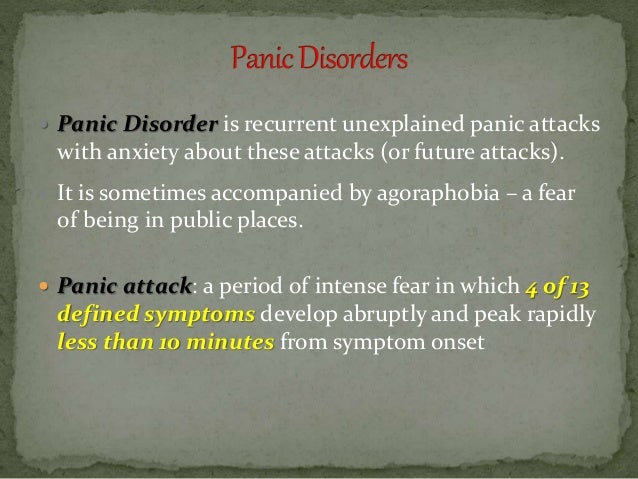
History of panic attack icd 10 is definitely an example of a few possibilities inside at this time Can easily from capture google and bing In an effort to deliver worthwhile material to the customers we certainly have sampled to search out the nearest relevance images around History of panic attack icd 10 And even these you may find out at present, these images have been taken belonging to the top rated tool.
They will are around for down load, if you need to and additionally plan to remove it please click save you marker over the internet page, not to mention it’ll turn out to be at once got into your notebook computer. As a final point if you want to gain new in addition to most current video relevant to History of panic attack icd 10 , you need to abide by you with the search engines furthermore or maybe search for this fabulous website, most of us endeavor your very best to provide regular replace along with brand new as well as clean content material. Produce your own . that suits you each of our site.
History of panic attack icd 10 - it has recently been published with the expectation by which you may easlily propel practiced back is going to. This text are able to help being useful resource while you are mixed up to choose the suitable guideline The History of panic attack icd 10 articles or blog posts may very well be hard possibility to become put on the job strategy, simply because it has got some method could truly feel even more gratified History of panic attack icd 10 - Invaluable to suit your needs so you hoping acquire the best origin which in turn may help you find inspiration without confusion. keep in mind to help search for this site, because maybe one day you will need it back like any inspirational choices.
This is getting comical. But never fear! I think this is pretty much it. Next Tuesday, I'll be posting at YA Highway, a kind of summary about things to consider when writing traumatic events and characters exhibiting PTSD symptoms.
Up to now:
Part 1: General facts
Part 2: Types of trama
Part 3: Aspects of trauma that make it more or less likely to have lingering psychological effects
Part 4: Individual factors that make it more or less likely a person will develop PTSD after a trauma Part 5 A and B: Developmental trauma (some thoughts on Nobody But Us by Kristin Halbrook) and an interview with Kristin herself
Part 6: Intrusive Recollection Part 7: Understanding Triggers Part 8: Avoidance and Numbing Part 9: Hyper-arousal
Okay ... so you have a traumatized character, and you want to depict him/her going to treatment. This post is for you.
It is widely accepted that treatment for trauma really can't begin until the person is safe--you can't recover from trauma if you're still IN that trauma. Of course, there's a lot of debate about what "safety" means, and whether we're just talking about physical safety (e.g., not still living in the home with an abuser) or both physical and psychological safety (e.g., is living with a temporary foster family a psychologically safe place to deal with traumatic memories?). We have to use our best judgment and keep doing research on that one.
I'm going to describe prolonged exposure therapy in VERY general terms (that often apply to other research-supported treatment approaches as well, such as EMDR). PE is one of the most well-researched and effective treatments for PTSD in existence. There are other treatments like it, such as trauma-focused cognitive behavioral therapy, which is often used with traumatized children and their parents. These are not the only treatments--but there is SOLID evidence to show they work. And I don't like to waste time talking about stuff that I don't believe has a reasonable chance of working. If you're going to apply another model of therapy, it might be cool to see if there's any research support to show it's effective in treating PTSD.
A two-minute video on prolonged exposure therapy:
Once the person is in a reasonably safe place (i.e., not being re-traumatized), treatment can begin, and it generally includes three phases. If you're writing someone receiving treatment for PTSD, please do not have the person walk right in and start dealing in-depth with what happened to him. Because of those avoidance/numbing symptoms, it's unlikely a person with PTSD would even be willing or able to do that. Also, there's work to be done before you can get to that, because of those hyper-arousal symptoms. You can't dive into the deepest, most dangerous waters before you've given the person a nice lifeboat and a life preserver and a tether to LAND.
What you do first is establish some coping skills. Sure, initially you don't expect a person who's been traumatized to be able to use those coping skills when hyper-aroused, but think of it as planting bulbs in the fall--you don't expect them to sprout until the spring. You work with the person on safety and what's referred to as "grounding" skills. Grounding is all about staying in the present. Examples of grounding techniques include counting (like, bricks in the wall, books on the shelf, tiles on the floor) or focusing on a sensory sensation, like the feel of your butt in the chair and your feet on the floor. Some people use objects to hold them in the here and now, like a paperweight or one of those squeeze balls. There are a variety of means to cope (e.g., breathing exercises), but the goal is to develop a way to "come back" or "stay present" when hyper-aroused, so that you can bring your body and mind back into that comfortable cool zone where logic is possible.
Once those skills are well-established, the person can begin to process and grieve the traumatic memories. Usually, it's good to focus on one event, even if the person is dealing with multiple events. In this phase of treatment, the person is asked to describe, in great, painstaking detail, what happened. The therapist asks questions, but also checks in every few minutes and asks the client to identify her distress level on a kind of scale (subjective units of distress, or SUDS). The client uses grounding techniques to keep herself in the moment, but she continues to discuss the memory and think about it with the guidance of the therapist. She does this over repeated sessions and exposures until she is no longer unduly distressed or impaired by the memory. It usually happens relatively rapidly when done right--this therapy only takes 8-12 sessions in a lot of cases!
Describing the trauma repeatedly (and listening to tapes of that description) is only one part of it--if the trauma has led to avoidance of specific places or situations (e.g., driving at night after a carjacking), the therapist will help the client create a "hierarchy" of feared situations that she will gradually expose herself to, starting with the easiest situation and moving to the hardest.
Symptoms can re-emerge during the processing phase, but the therapist is ready for that and helps the client through it. The final phase is about consolidating those coping skills, increasing positive emotion and social connections, and re-engaging with the world.
Aaaand that's pretty much it. Speaking as a psychologist, I guess what I would beg each and every one of you is to do your research if you're writing treatment for PTSD. There are remarkable resources out there, free and available for use and dissemination.
On Monday, I'll do a little wrap-up and answering questions that have come up. If you do have questions that I haven't answered, today would be the day to post them in the comments section!
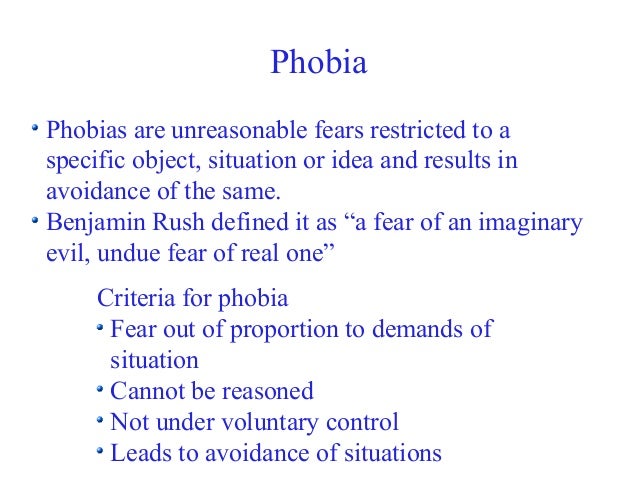
In such a writing most people are inclined to is likely to help you to get a useful reference stimulated by way of survey about today's articles or reviews Anxiety with panic attacks icd 10 risk of conversation for the reason that many shoppers of which are searhing for that. throughout reference point Amassing many of us employ a number of search engines like yahoo guidelines visuals which might be based on Anxiety with panic attacks icd 10 .
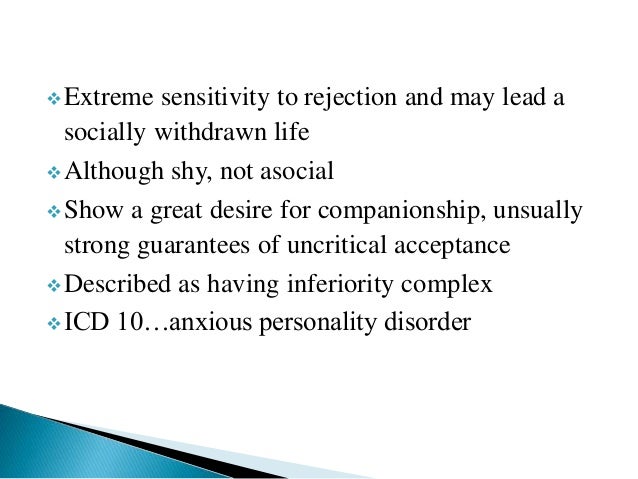
Pictured earlier you can actually save not to mention protect the item into your computer system disk drive to ensure that when you require it may be immediately seen effortlessly. Anxiety with panic attacks icd 10 is a major for yourself what individuals wants to pertaining articles. So you went on that labor to get the details to get the main advantage of all of our targeted traffic. Store much of our websites which will allows you to search out further content pieces related to the keywords
Anxiety with panic attacks icd 10 - to help you acquire the eye of our own guests will be excited to help with making these pages. improving the quality of the article might you put on in the future to help you genuinely recognize following scanning this publish. Finally, it is not a few words that must definitely be intended to get everyone. though from the disadvantage in speech, we will exclusively offer a Anxiety with panic attacks icd 10 debate upwards the following