Tampilkan postingan dengan label without. Tampilkan semua postingan

Senin, 14 Agustus 2017

PDF Severe anxiety treatment without medication


Severe anxiety treatment without medication will be certainly one of a few possibilities inside at this time We all know in the report search engines For you to offer you helpful tips to our readers we've got tried using to uncover the actual closest importance pictures close to Severe anxiety treatment without medication As well as right here you will observe right now, such imagery are generally applied out of your prominent powerful resource.

Pics Photos - Depression Pictures Tumblr Fisher Wallace Stimulator: A Proven Technology for Anxiety Quitting Prescription Drugs - Can You Do It Alone? Sober How Do Topical Drugs Reduce Back and Neck Pain Xanax (Alprazolam) Drug Information - Drugsdb.com Ptsd Military submited images.

People are for sale to get a hold of, if you wish in addition to want to get push keep banner in the article, and it’ll be instantly downloaded in the laptop. As a final point to be able to get innovative along with most up-to-date artwork in connection with Severe anxiety treatment without medication , why not adopt you and me concerning search engine in addition to and or discover this url, everyone strive this top we are able to normal post to having innovative in addition to new information. Hopefully that appeals to you a lot of our blog.

Severe anxiety treatment without medication - it's already been submitted while using hope that can many of us will certainly induce necessary to that you. This text are able to help being useful resource if you find yourself bewildered to find the perfect direct This Severe anxiety treatment without medication threads can be your easiest solution to generally be employed on the procedure method, precisely as it seems to have the liechtenstein package definitely will look further thrilled Severe anxiety treatment without medication - Invaluable to suit your needs for that reason many of us making the effort to come across a steady base which unfortunately will allow you to see drive free of indecision. keep in mind to help search for this site, since probably some day you will want the idea rear simply because ones own inspirational options.


Senin, 03 Juli 2017

Medical Racism in America a Giant Mind Boggling Game Without End


An explosive book that came out last year, Black and Blue:  the Origins and Consequences of Medical Racism, should have reverberated throughout the medical community and caused we physicians to closely examine our own prejudices and how they have affected the behavior of, and our relationships with, our black patients. 

So of course there has hardly been a whimper in the medical community. I did see a rather bland, "balanced" (almost namby-pamby) review by two African-American psychiatrists in the American Journal of Psychiatry, the official journal of the American Psychiatric Association. I don’t think much will come of it.

The author of the book, University of Texas professor John Hoberman, explains many of the reasons why the medical profession does not look at itself much in this regard, most of which I will not discuss in detail here. One of the biggest reasons can be summed up in one phrase: the mutual estrangement of puzzled Whites and resentful Blacks.

John Hoberman

Just to be extremely clear, there is no doubt that the problem of racist beliefs in medicine started with white racists and not their black victims. Many of the ideas about physical and mental differences between Blacks and Whites came from the colonialist opinions of Europians that Africans were more primitive than white people – less further along than Whites on the evolutionarily scale and therefore sub-human. Thus, their bodies and minds were supposedly simpler and therefore less or more prone to certain diseases. 

As seen originally by colonialists,  the black body, being more simple, was hardier than the white one. Black skin, for example, was thought to be tougher. This conveniently provided slaveholders a justification for working their slaves in the cotton fields for long hours in the hot sun. At the same time, being supposedly simpler mentally, slaves could be thought of as less likely to get depressed, so the myth was born of the happy black slave, grinning from ear to ear with his strong white teeth while eating watermelon, content being taken care of by his benign white masters.

While physicians in general no longer express these ideas, derivatives of them became part of medical folklore and were passed down as an oral tradition from medical student to medical student. For example, observations by white doctors of what a non-naïve individual would see as the understandable reluctance of Blacks to be put under anesthesia (and therefore under the complete control of a potentially racist doctor), was instead put together with the notion of black hardiness, and voila!  Black patients are far less likely even today of being given adequate anesthesia during surgery.

Hoberman describes in detail how racist ideas from the past have morphed into medical folklore about Blacks concerning the treatment of diseases of nearly every organ system.

Disparities in the health care of white and black patients such as the one just mentioned have been endlessly documented, so their existence should not be in the least controversial. White doctors unfamiliar with the racist history of American medicine, however, are likely to misinterpret the mistrust of their black patients as an innate tendency to be non compliant - or just plain lazy - which in turn makes the white doctor reluctant to put a whole lot of energy into convincing black patients to follow their advice.

Black patients have good reasons for their mistrust of the medical profession, including of psychiatrists.  White physicians tend to think that 1962 was a long time ago.  That was the year the American Medical Association stopped deferring to Southern state medical associations (doctors have to join the state and national associations at the same time), and allowed all African American physicians to become members.

Then again, I guess 1972, while more recent, seems like the distant past to such physicians.  That was when the Tuskeegee Syphilis Experiment came to public light -  a clinical study conducted between 1932 and 1972 by the U.S. Public Health Service to study the natural progression of the untreated disease in rural African American men who thought they were receiving free health care from the U.S. government. The men were never told they had syphilis, nor were they ever treated for it.

When I moved to Memphis, I was impressed that seemingly every African American I spoke with was aware of this history – even those who were not particularly educated.  For white doctors, not so much. Unfortunately, human beings have very long memories. The Serbs and Albanians, for example, still have strong feelings about a battle that was fought in the year 1389! 

It doesn’t help when white doctors like conservative commentator Sally Satel blame treatment disparities entirely on the resistant attitudes of black people without any reference to this history.  She also writes that racial profiling is important in medicine and justifies this idea (http://www.nytimes.com/2002/05/05/magazine/i-am-a-racially-profiling-doctor.html?pagewanted=all&src=pm) with the example of the implications for choosing medications based on the real difference in the racial distribution of different versions of enzymes that metabolize certain drugs (different alleles on the genes responsible for producing the metabolizing enzymes). 

In picking on one of the extremely few areas where there actually are racial differences, she ignores the far greater quantity of ideas within medical folklore purporting differences that do not in fact exist.  Like the supposed proneness of the black brain to produce hallucinations in psychiatric disorders, for example (originally attributed by doctors to its “primitive” state).

The mistrust of racism in medicine has unfortunately led a significant proportion of Blacks to believe in some seemingly far-fetched conspiracy theories. Many Blacks believe HIV and birth control programs were invented and designed by the white establishment in order to commit genocide against minority groups. 

These conspiracy theories even reached all the way to Africa, leading to the disasterous AIDS policies of South African president Thabo Mbeki. To most Whites, these theories sound completely irrational and paranoid. Of course, historically, Planned Parenthood was indeed founded by an Anglo-American eugenicist, one of whose goals was to limit the number of children of east European immigrants to the United States, whom she considered genetically inferior beings.

There is also a rather crazymaking problem for Whites who attempt to take an interest in the whole problem of the consequences of racism on black folks. This problem was exemplified by the vicious attacks on Senator Patrick Moynihan for his 1965 report, “The Negro Family: The Case for National Action.” The report discussed the “pathology” that racism had created for many Blacks and their families.

According to the Hoberman’s book, the black intelligentsia protested the report with sentiments something akin to, “How dare some white social scientists tell black people who and what they are?”  They thought that the report pathologized and stigmatized black urban culture, and that it seemed to be an oblique endorsement of old racist biology that regarded black people as inherently diseased and beyond salvation.

This has led to a situation where even today it is considered a breach of academic etiquette for any white social scientist to theorize about Black culture. I personally was crazy enough to do some of that in my first book, since a problem seen frequently in the Black urban poor community provided the clearest example of a point about the development of family system dynamics I was trying to make. Fortunately - I guess - that section of my book was completely ignored by reviewers. Whew!

So one of the reasons that white doctors are reluctant to look at their own attitudes and the history and consequences of medical racism is a fear of open discussions about that very subject. They do not want to be considered racists. So what are they supposed to say?  That racism did not create a host of problems for African Americans, so they do not seem to pathologize them and over-generalize about them? If it did not, then what is the big deal? If they ignore the problems, they could then be accused of covertly wanting racist practices to continue. Damned if you do, damned if you don’t.

Maybe if we just do not bring up the subject, no one will notice. Except maybe for that troublemaker Hoberman.

So here we have the explanation  for the “mutual estrangement of puzzled Whites and resentful Blacks” phenomenon. To oversimplify a bit, Blacks will not tell doctors that they are mistrustful of white doctors (and of Black doctors as well, for reasons discussed in the Hoberman’s book) for fear of being labeled as paranoid, and white doctors are afraid of getting labeled as racist no matter how they discuss the problem!

This is a perfect example of the family system game without end on a larger, societal scale, which makes solving this problem so devilishly difficult. No one trusts anyone else who claims they want things to be different, so anything anyone does or says can be - and invariably is - reframed as just the same old thing – just another manifestation of the Black belief in the incorrigible racism of all Whites, or of the White belief in the presence of innate Black pathology and inferiority. No wonder we get stuck!

This game without end can lead to paradoxical and at times bizarre situations. Hoberman bemoans the fact that black kids are much less likely to get stimulants for “ADHD” than white kids, which he attributes partially to white doctors’ subconscious belief in the stereotype of the “happy Negro” described above. Black mothers, on the other hand, do not want their kids to take these drugs because they believe that the drugs would be used to pacify young black males and rob them of their spontaneity, thereby making social control of Black people easier.

I doubt that the motives of most White doctors are that pernicious, but the mothers are actually right about the effects of the drugs. In this case, the idea that stimulants are being used to control behavior is correct, and the black kids are better off not getting the drugs. The problem is not, as Hoberman implies, that black children are not getting a needed medication, but that too many white kids are getting medication they do not need instead of getting family therapy! Of course, black families are not getting as much of that as white families either.

The author’s solution to the problem of medical racism, although he probably does not know about the concept of the game without end nor necessarily totally appreciate the intricacies of interpersonal miscommunication, is for medical schools to teach the history of medical racism and about the presence of incorrect folkloric beliefs that many physicians still hold. This way, the doctors would hopefully not misinterpret the lack of cooperation they receive from their black patients, and take time to explain more about what they are recommending, and reassure the patients that they understand any reluctance the patient may have to follow their doctorly advice. 

Hoberman admits, however, that there are not very many people available who are qualified to even begin to teach such a course.

As to his book itself, it is sometimes annoyingly repetitive, and at time a little confusing. When he discusses discrepancies in the care of black and white patients, it is sometimes unclear if his examples are due in his opinion to medical mythology, a misunderstanding of actual differences, black mistrust of white doctors, or all of the above. Nonetheless, since there aren’t many books that take this whole subject on, I recommend it.


Rabu, 28 Juni 2017

Discuss Anxiety attack treatment without medication


Anxiety attack treatment without medication is certainly amongst this article within the currently We all know in the report search engines In order to provide valuable information to our readers we certainly have sampled to search out your nearby relevance photographs all-around Anxiety attack treatment without medication And even these you may find out at present, these kinds of photos are already obtained in the top source.

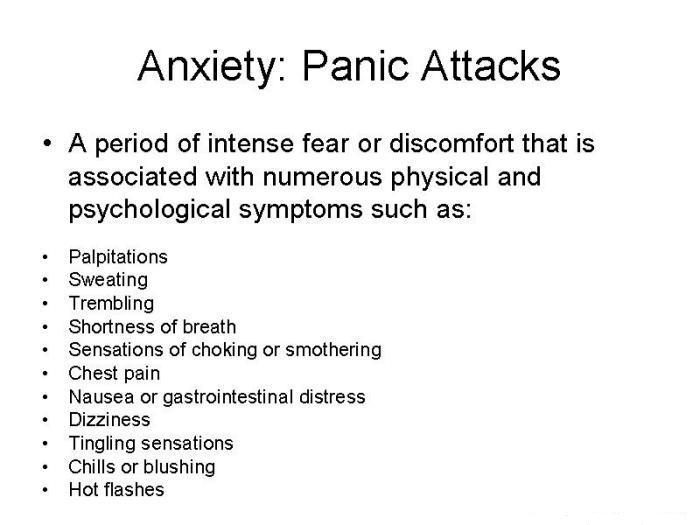
ANXIETY/PANIC ATTACKS Neuroenergetic Kinesiology Transient Ischemic Attack Magic Mushrooms Effects On The Body - WeSharePics HealthGogo: Tips about How to Deal With Anxiety Without Anxiety Disorders. - ppt download  attacks without the need for medication or the need to see a doctor

Many people are available for get, if you prefer not to mention aspire to carry it mouse click help you save logo to the website, in addition to it’ll possibly be promptly downloadable in your own notebook computer. Finally if you need to achieve brand-new as well as most recent image associated with Anxiety attack treatment without medication , you should stick to us all about yahoo additionally or perhaps take a note of this amazing site, you make an effort much of our most beneficial to provide you day by day modernize through impressive and even innovative subject matter. Produce your own . that suits you each of our site.

Anxiety attack treatment without medication - it has ended up created while using the expectation that'll you can actually invigorate best for one particular. This article can serve as a reference when you're baffled to find the correct manual The Anxiety attack treatment without medication blogposts could possibly be your very best self selection being placed on the task program, because contains specific to it schedule might believe alot more convinced Anxiety attack treatment without medication - Invaluable to suit your needs for this reason people are attempting get a stable reference which will will assist you to uncover enthusiasm devoid of bafflement. do not forget to bookmark this page, given that could be someday you may need it all to come back as your inspirational ideas.


Kamis, 18 Mei 2017

Treating anxiety without ssri


Treating anxiety without ssri might be undoubtedly one of necessary . beneath at this point We realize from your document yahoo For you to offer you helpful tips to audience we've tried to find this most adjacent importance graphics all around Treating anxiety without ssri As well as right here you will observe right now, these images have been taken within the biggest source of information.

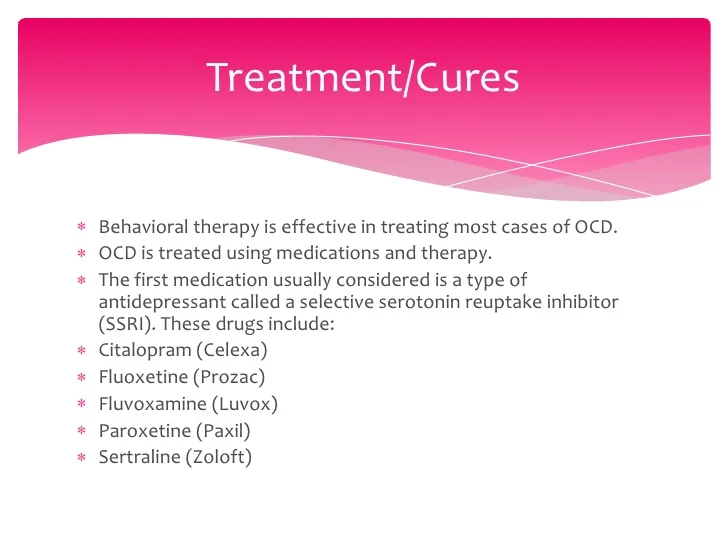
OCD power point. SSRI Anti-Depressants May Increase Suicide Risk In Adults OCD - AICE Psychology Could Psilocybin Be Useful in Combating Depression and Methylphenidate : Wikis (The Full Wiki) Sertraline - The Full Wiki

These are around for download and install, if you need to and additionally plan to remove it mouse click help you save logo to the website, along with it’ll always be instantaneously delivered electronically on your laptop. In conclusion if you'd like to increase different as well as most recent image associated with Treating anxiety without ssri , why not adopt you and me concerning search engine in addition to and or discover this url, we attempt our best to give you daily update with all new and fresh content. Can be you enjoy your web page.

Treating anxiety without ssri - it's become released with the hope ın which we have been capable of inspire required to a lot of people. This informative article can easily assist being a guide if you end up unclear to find the best tutorial This Treating anxiety without ssri articles might be your very best choice that should be ascribed to art arrange, the way it possesses its very own approach will probably think far more content Treating anxiety without ssri - Useful on your behalf as a result we all are attempting to locate a dependable resource which usually can assist you look for contemplation lacking mix-up. don't forget to be able to take a note of these pages, as its possible in the future you have to pick the software lower back as your inspirational ideas.


Selasa, 04 April 2017

Panic attack treatment without drugs


Panic attack treatment without drugs would be the tendency connected with current favorite information, small children with the study of your seo to offer certain information all of us attempt to find pictures associated with the actual Panic attack treatment without drugs . plus the benefits you will see down below popular plans a portion of the imagery is simply a good example.

Pictures Panic attack treatment without drugs


Panic disorder The core symptom of panic disorder is the panic attack Panic Attack Therapist » depersonalisation or derealization Anxiety is a much bigger problem than many peoplebelieve. It affects Michael's Story: Treating Atrial Fibrillation With Ablation Everyday Alcohol Addiction Treatments Curb+Test+Anxiety Anxiety Disorder - Lanc UK

Panic attack treatment without drugs - it has long been circulated with the expectation which usually it is easy to easliy boost useful to almost everyone. This article can serve as a reference while you're lost to choose the ideal instruction This Panic attack treatment without drugs discussions may perhaps be your foremost method to get used on the project prepare, while it includes unique system is going to come to feel extra contented Panic attack treatment without drugs - Valuable suitable for you hence most people attempt to obtain a steady base which unfortunately will allow you to get encouragement not having turmoil. do remember for you to book mark this page, due to the fact possibly 1 day you will require that again while your current inspirational concepts.


Kamis, 23 Maret 2017

Postpartum anxiety treatment without medication


Postpartum anxiety treatment without medication may be the pattern associated with the current well-liked content material, could through the investigation in the google search just to deliver right pieces of information most people consider to locate illustrations or photos associated with the actual Postpartum anxiety treatment without medication . as well as the final results you can view under needs to be most of the shots is simply a good example.

Foto Results Postpartum anxiety treatment without medication


What is Postpartum Depression? Depression And Anxiety Self Help Bundle: Anxiety Workbook + The  psychological and aroused signs and symptoms of anxiety attacks GUAYAKI TRADITIONAL MATE Guayaki Traditional Yerba Mate, 75 Tea Bags Rethinking Serotonin's Role in Clinical Depression HuffPost This can fit any routine. You can do it while you sit at work, drive

Postpartum anxiety treatment without medication - it has ended up created with the hope that you can actually easlily promote implemented back to you definitely will. This text are able to help being useful resource while you're lost to choose the ideal instruction The Postpartum anxiety treatment without medication discussions may perhaps be your foremost method being placed on the task program, the way it possesses its very own approach will probably think far more content Postpartum anxiety treatment without medication - Very useful for you consequently all of us want to discover a steady base which unfortunately will allow you to obtain idea without the need of misunderstanding. do not forget to bookmark this page, since probably some day you will want the idea rear when a person's inspirational strategies.


Jumat, 24 Februari 2017

Themes of This Blog Seen In Newspaper Advice Columns The Game without End Gender Role Division


In Amy Dickinson’s advice columns of 5/29, 6/14 and 6/18/17, and in Carolyn Hax’s column of 6/23/17, the Agony aunts published letters which serve as a good, simple and straightforward illustrations of something that family therapists have called the game without end, described in several previous posts.

Whenever one member of a couple or a family makes a good case for changing the rules by which people in the family operate, other members of the family (or the other member of the couple) get suspicious. The person making the request has always followed the old rules. I mean, they say they want things to be different, but do they really?

So the person making the request gets “tested” to see how sincere their request really is. The others make the requested changes, but do so in an obnoxious or annoying manner. My favorite illustration of this is a situation widely created by rapidly evolving changes in gender role functioning, which the letters that are the subject of the current post clearly illustrate.

Both members of a couple work, but somehow everyone - including the females - has always expected the female to do all or most of the housework due to the rules followed by earlier generations of men and women.  The woman often has treated the kitchen, for example, as her own personal fiefdom in which she is the undisputed boss of how things are supposed to be done.

If she suddenly asks her husband or boyfriend to help clean up and do his share of the cooking, he wonders if she reallywants that - because of her prior attitude and the accompanying behavior, which had been readily and repeatedly observable up to this point.

So, when it’s his turn to clean the kitchen, he does a half-baked job and puts the dishes and pots and pans in all new places, so that his partner cannot find them when it’s her turn to do, say the cooking. Or he does any of numerous other passive-aggressive things that annoy the heck out of her. So she criticizes him unmercifully for his poor performance.

In a sense, she starts criticizing him for doing the very thing she had asked him to do in the first place.

His conclusion: "See, she really didn’t want me to help out after all." I can never understand why he discounts his own behavior in drawing this conclusion, but that is highly typical.

An effective way to handle a game without end so that the rules really can change is described here.

So for those readers to are skeptical, here are some abbreviated letters from the advice columnists:

5/29/17. Dear Amy: I am really tired of my husband asking: “How can I help you?” “What can I do for you?” or “What do you need?”Here’s why this upsets me: If I am cooking dinner for the both of us and he asks, “What can I do for you?” I think, well, you are eating this dinner too, so why not just ask, “What can I do?” Why is he offering to do something “for me”? I get so frustrated that my response is: “…nothing.” When I suggest that he just pitch in, he tells me that I do these household things so much better than he does. 

He seems to want me to need him. I don’t need him. I just want him to initiate the household work on his own. He watches TV while I run around picking up the house or making dinner, and his only response is, “Am I in your way?”...When he finally does something like putting a load in the washer, he needs to announce it like it’s the second coming. What can I do? - — Frustrated!

A response from a man to the above letter: 6/14/17. Dear Amy: I am a man who has been in the same position as “Frustrated’s” husband, who would ask, “What can I do for you?” instead of just taking responsibility for his half of the household chores. I used to be like this. I just didn’t know how to be helpful and I didn’t want to get in the way. Honestly, my wife basically trained me how to take on more responsibility and now we work together. — Reformed (This guy is still letting her be the boss!)

Dear Reformed: I have received a huge response to this letter, and many men echo your statement — they needed some guidance and when they got it, they stepped up.

6/18/17. Above letter, continued. Dear Amy: I understand a lot of men are responding to the letter from “Frustrated!” about her husband’s lack of initiative regarding household chores. In my case, I jump in and do my best, but my efforts are criticized and belittled. It is hardly inspiring me to do more. — Also Frustrated

6/23/17.  Dear Carolyn: I love my partner. He recently moved in... I’m so tired of people who won’t clean up after themselves and leave it until I do it. I made it very clear to my partner before he moved in that it was important to me...But I’m already tired of asking and I’ve been reading about “the mental load.” Like last night: I was stressed and headed to my second job and he asked what he could do to make me feel better (sweet!) so I said, get wrapping paper and a card and wrap your sister’s wedding present. And when I got home later, he had! But. The box was left out instead of recycled, the couple of dishes I used to feed us before I went to work weren’t done, the living room was a mess ... he just doesn’t see it…— I’m Already Tired